In the lead up to International Women’s Day, we look at the ongoing issue of sexism in the comedy industry.
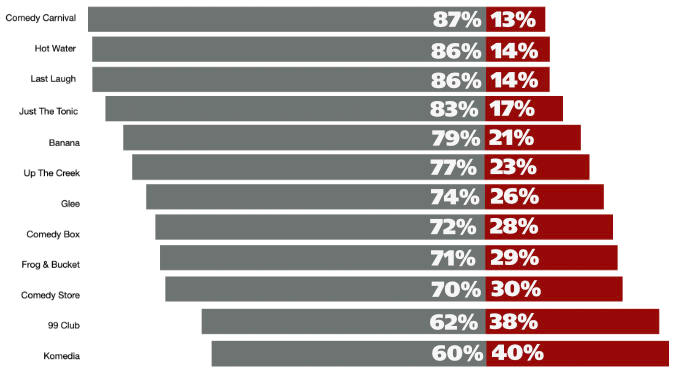
Back in 2024 Chortle release an article titled ‘Revealed: The comedy clubs that book six times as many men as women’ off the back of an article by comedian Lucy Beaumont titled ‘Where are all the women?’ in which she called out comedy clubs that have all-male bills. The analysis by Chortle found that almost one in five weekend bills at some of the UK’s biggest venues featured all-male line-ups. We were proud at Komedia to come out top for featuring more women on our mixed bills that any other club, but it begs the question, why in 2026 is this still an issue? And what are the underlying causes?
Disappointingly, we’ve received push-back as a venue ourselves when presenting all female line-ups. When hosting our Komedia Comedy Club International Women’s Day shows for the last couple of years, we’ve seen ticket sales fall dramatically, specifically for those dates, when the comedy clubs around them – with mixed bills – aren’t affected. We also regularly receive complaints when women speak about their bodies on stage, surprisingly mainly from women, whereas we rarely receive complaints when men do the same. This bias from women themselves was also highlighted by a story from one of our team, who used to work at the Box Office at Pleasance at the Edinburgh Fringe. She said that she often would hear women, looking for a recommendation for a show, say: “But not a show by a woman, I don’t find them funny”.
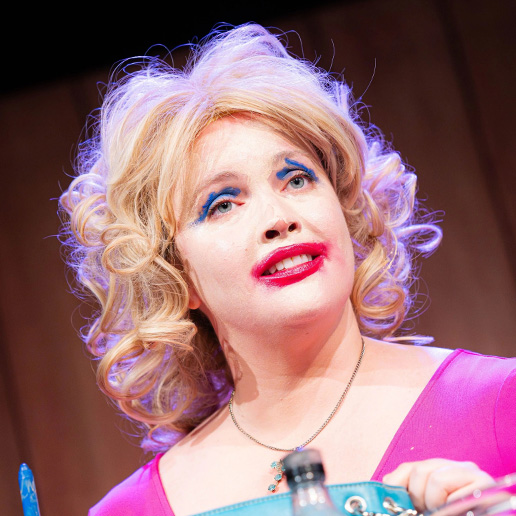
There seem to be double standards too, when it comes to the reactions to the types of comedy performed across the genders. As comedian and clown Kate Owens points out in her article ‘Let women be funny with their bodies’, when it comes to physical comedy “A man shaking his belly around is hilarious. A woman doing the same is ‘too much’. Men’s bodies are vessels for comedy. Women’s bodies are meant to be sexy – or invisible”. She also speaks about her frustration when she’s constantly called “brave” as opposed to funny when it comes to her performances, as well as the backlash she received when a video of one of her sets made it to Youtube, with the first comment being “Gross, I don’t want to see that.”
The double standards seem to continue when it comes to gender-based ageism targeted at female comedians. Comedian Jules O’Brian, who started performing at 40, points out in ‘New, female and over 40 – why the comedy world finds that combination confusing’: “When men start comedy later, they might get a few snide ‘mid-life crisis’ jokes, but as long as they can do the job adequately, audiences accept them. No one blinks at an older bloke with a mic. For women, it’s different. Simply stepping on stage as a woman often invites the crossed-arms brigade. Doing it as an older woman can add fuel to the fire.” Furthermore, in the UK Live Comedy Sector Survey Report 2024, sexism and ageism were noted as a particular concern within the industry by a number of respondents.
It’s not just live comedy that suffers from this bias. Over the years, things have barely shifted when it comes to the number of female writers for television sitcoms, with just 11 per cent written entirely by women, the same figure published by the Writers’ Guild Of Great Britain in a 2018 report. This is despite the fact that the report found that female-written films were ‘leading at the box office and receiving a more positive critical and audience reception than their male equivalents.’ And it’s not just about the Box Office; if female characters are consistently written by men, how does this influence female representation on screen?
Comedy Writer Jenny De Jersey told us, “Feedback on my long-form comedy featuring a mother was dismissed with “we already have Motherland”, as if another perspective on an experience shared by around 65% of adult women couldn’t be valid or interesting. Change only comes when women’s voices are actively championed.”
And on the topic of motherhood’s representation on and off stage, as comedian and Komedia regular Esther Manito points out: “Motherhood itself is still treated with open misogyny in comedy. We’re told it’s boring, overdone, not worth the stage time. But mothers desperately need honesty, connection, and relief… We were meant to mother in tribes, not alone, comedy helps rebuild a tribe.”
When it comes to wage disparity between the sexes, the picture isn’t much better – on stage or behind the scenes. The UK Live Comedy Sector Survey Report 2024 found huge wage differences between men and women, regardless of experience levels, with some performers reporting that less experienced male acts were paid significantly more than experienced female acts on the same bill. In the same report in 2025, gender and male bias was again raised, with one respondent saying: “It feels like most of this industry is run by men, women getting paid less, work harder for spots”. Separately, according to a research paper titled ‘The festival industry and gender inequality: The case of Edinburgh, the world’s leading festival city’, looking at the issues that women face in achieving leadership positions in the festivals sector, men were found to earn approximately 60% more than women on average, even though women dominated most sectors of the workforce.
Unfortunately, we can’t talk about women in comedy without touching on the troubling figures around sexual harassment and assault in the industry. In figures compiled by the Women In Comedy Festival in 2019, over one in three female comedians has been sexually harassed on stage, and one in six have been followed after a gig. Separately, a 2018 Chortle study uncovered some shocking statistics: over a quarter of female comedians had been sexually assaulted by their fellow performers and one in 13 has been raped by a fellow comic. In an article which compiled experiences of abuse, some women stated they felt unable to report these instances due to fear of retaliation and potential loss of work. It’s not just other performers either, there were multiple accounts of abuse from promoters, with one performer stating that a promoter had ‘a blacklist of female performers they exclude because they refuse to ‘play ball’ regarding sexual favours.’ On the flip-side, in a 2020 article about this very topic, comedian Stevie Martin stated that ‘Female comedians have a WhatsApp blacklist of predatory men’.
This might all seem incredibly bleak, but progress is being made. In 2018, performing arts and entertainment trade union Equity launched their Agenda for Change, created with the aim of combatting systemic issues in the entertainment industry, specifically sexual harassment, bullying, and low pay. As part of this, they now have a dedicated member of staff available on their helpline (020 7670 0268) for any member who has concerns on bullying, harassment, sexual harassment or mental health. Also, as of 2024, UK law requires all employers – including comedy clubs – to take ‘reasonable steps‘ to prevent sexual harassment.
In 2021, comedians Kiri Pritchard-McLean and Nina Gilligan founded Get Off Live Comedy, an independent and confidential HR support service that deals with sexual harassment in live comedy, created in reaction to the fact that many victims of abuse felt there were no official channels for reporting.
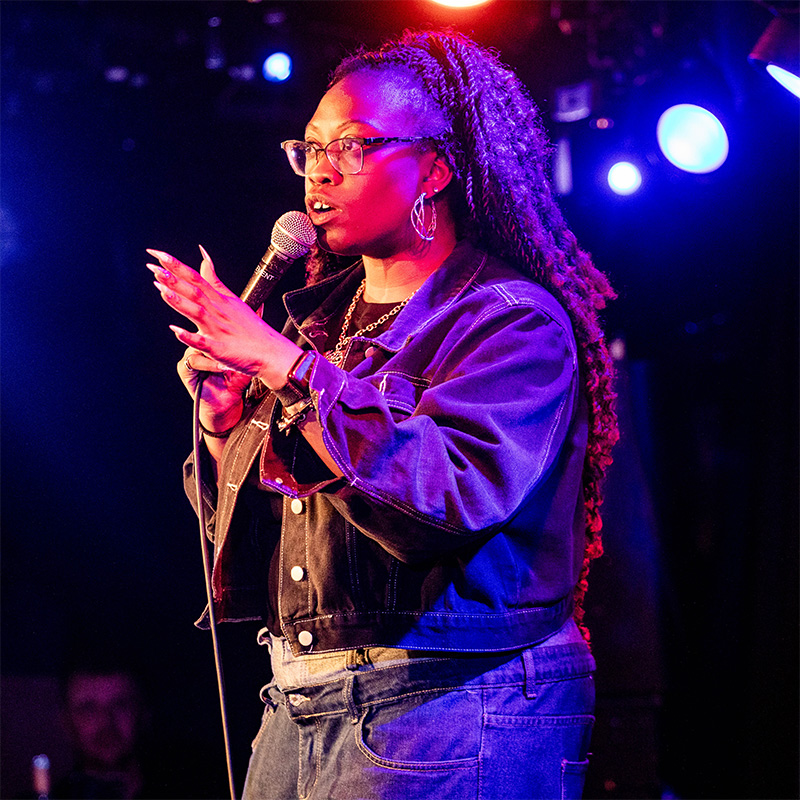
Female comedians are also taking their success into their own hands, finding new ways to unlock audiences. Podcasting and social media are becoming increasingly popular. As comedian and Komedia regular Sikisa says: “Social media has also helped women bypass the old gatekeepers. If TV bosses think you won’t draw an audience, you can just hop on TikTok, build a million followers, and then sell out arenas.” And we find this to be true as well. There are many examples of female comedians who gained popularity through social media and then went on to sell out large-scale venues and/or tours including Serena Terry aka Mammy Banter, Grace Campbell, GK Barry, Kyla Cobbler, Rosie Holt, Abi Clarke and many more.
Another reaction to gender imbalance at live shows is the creation of specific events to champion and promote women in comedy. One example is The Women in Comedy Festival in Manchester, created in 2012, run by Jessica Toomey, Director of the Frog and Bucket Comedy Club and FAB Comedy Management, with the aim of being ‘an accessible and supportive event that celebrates, champions and promotes all things funny and female across a variety of platforms.’
One more organisation that needs to be mentioned is Funny Women who have been showcasing the best new female and non-binary talent since 2003. They run regular live comedy nights across the world, including a residency at Komedia, with their Brighton show being their longest-running and most successful comedy night. Their events also include comedy courses and workshops to support the next generation of talent, and the famous Funny Women Awards. Previous winners include Zoe Lyons, Katherine Ryan, London Hughes, Jayde Adams, Desiree Birch, Thanyia Moore, Laura Smyth, Lorna Rose Treen, Lara Ricote, and more. It’s also worth mentioning that runners-up include the likes of Sarah Millican, Sara Pascoe, Bridget Christie, Kerry Godliman, and Diane Morgan.
Lynne Parker, Founder of Funny Women says: “When I created Funny Women back in 2002 and launched the Awards in 2003, little did I think that I would be dealing with the same old issues in 2026! Although we’ve been at the vanguard of changing the way the comedy industry looks and feels, misogyny still exists, particularly on the grassroots circuit. Women are still being sidelined in favour of the ‘boys club’ and there is an even greater need for safe places for women to develop and perform comedy. That’s why we launched The Glitter Project, our award-winning outreach initiative, to provide ‘A Safe Place’ for those who identify as female, to access creative skills and support their health and wellbeing.”
So, what can we do to promote change? Here are some ideas:
Give female comedians the experiences needed to reach the level required to be considered for work. If you’re a promoter or venue looking for an excellent female comedian for your next event, Dani Johns, a comedian herself, compiled a list of more than 400 female stand-ups working in the UK. You can find it here.
If you’re a venue or promoter, have a Sexual Harassment Policy in place which includes details on how to report incidents. If you’d like to see ours, just let us know.
Check out Chortle’s article called ‘How can we make the comedy circuit safer?’ which features some really useful ideas for keeping performers safe at gigs. These suggestions came directly from female performers surveyed for their 2018 study.
Support female comedians by attending their gigs. You can see what comedy we’ve got coming up here and be sure to check out Funny Women and all of the performers and organisations mentioned in our post.
Article by Kelly Edwards-Good. Photos by Charlotte Horton (Esther Manito and Sikisa).